
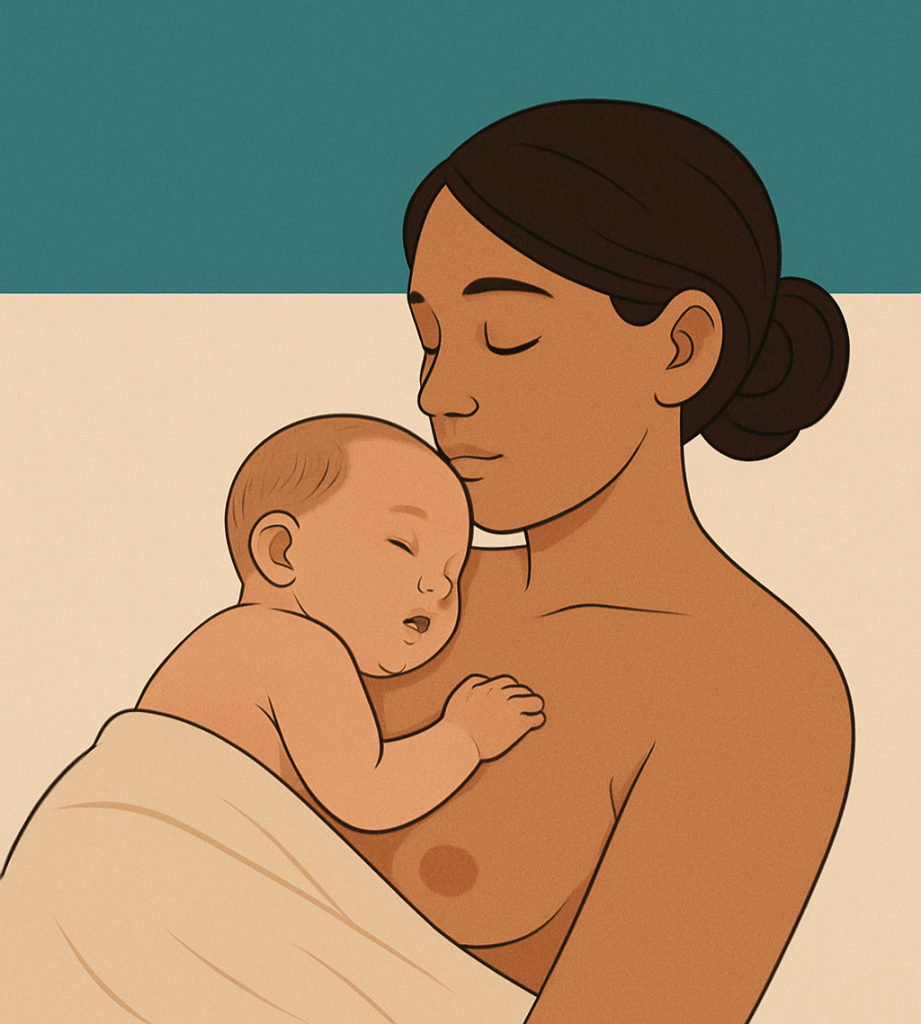
As we look forward to the birth of our child, most of us are told about the magic of skin to skin. It’s great for bonding. It helps babies feel secure. Someone might even point out that it can support breastfeeding or boost milk supply. If you meet with a lactation consultant during pregnancy, they’ll likely mention it too; it’s one of our favourite tools for getting feeding off to a good start.
hk And then, mere minutes after birth, you’re told to wrap your baby up! Dress them warmly! They look cold! Pop them in the cot – it’s safer! Be careful – you’ll spoil them if you hold them too much!
Let’s just say, I have thoughts. And here they are…
The Benefits of Skin to Skin
Skin to skin feels instinctively wonderful after birth. But it’s not just comforting, it’s profoundly beneficial. And the science backs it up.
For newborns, skin to skin can:
Regulate body temperature
No sleepsuit needed: skin to skin (with a blanket over the top if necessary) is perfect . Your body is incredible: your chest can warm up or cool down to help your baby’s temperature regulate. And for those with twins? Your breasts can regulate temperature independently!
Regulate heart rate, breathing, and oxygen levels
When you are in skin to skin contact, your chest becomes their natural regulator for these vital bodily functions.
Promote calm and reduce crying
The sound of your heartbeat, the rhythm of your breath, and the warmth of your skin all lower cortisol levels, reducing stress for your baby.
Support immunity and gut health
Your skin’s microbiome starts building your baby’s immune system and supports healthy gut development.
Improve sleep and growth
Babies held skin to skin sleep more deeply, gain weight more steadily, and spend more time in quiet alert states. For preemies, it boosts melatonin and improves sleep quality.³
Support breastfeeding
Skin to skin activates natural feeding reflexes, helps with latching, and boosts milk supply.
Strengthen brain development and developmental outcomes
Kangaroo care (24/7 skin to skin) in preemies is linked to better cognition, stronger emotional development, and even higher IQ.
Why Skin to Skin Supports Feeding
Feeding is instinctive, but it’s also complex, especially when your baby is figuring out how to suck, swallow, and breathe in quick succession. Skin to skin simplifies things. It reduces stress so your baby can focus. It also triggers feeding behaviours: rooting, opening the mouth wide, and seeking the breast. And the parent? They instinctively, even subconsciously, shift and adjust their body to support a deeper, more comfortable latch.
A few things that get in the way:
Those adorable scratch mittens? They might look sweet, but they actually get in the way—babies use their hands both to find the nipple and to stimulate milk flow, just like kittens kneading.
That cute little hat? As maternity campaigner Kemi Johnson puts it, it “sabotages oxytocin flow for the mother because she can’t smell that wet head and stroke it.”
Your well-designed nursing bra? It may well be tucked under your breast, blocking your baby’s chin from having contact with the skin (which encourages them to open their mouth wide). Try taking it off!
If you’re struggling, a lactation consultant can help identify what’s getting in the way, whether it’s positioning, latch, or simply needing more skin to skin time to get things going.
It’s All About Oxytocin
Oxytocin is the hormone of love, calm, and connection, and skin to skin triggers its release. It helps you as well as your baby by reducing anxiety, easing stress, and encouraging bonding. The more it rises in you, the more it rises in your baby, creating a positive feedback of nurture and love.
This is the same hormone that jumpstarts labour, and now it’s helping your uterus contract to return to its normal size, helping your body heal postpartum, boosting your mood, and triggering your milk ejection reflex (letdown). This isn’t just important for breastfeeding, it’s helpful if you’re expressing with the intention of bottle feeding, too.
If you’re not feeding your baby with your own milk, or feeding hasn’t gone as planned, skin to skin still matters. It supports healing and connection, whatever your feeding journey looks like.
Milk Supply 101
The early days matter. Your body is learning how much milk to make based on demand. More stimulation = more supply (and yes, many people can relactate to some degree later, but it can be more work depending on your individual genetics and health history). Babies placed skin to skin feed more often and more effectively. Research shows that babies placed swaddled in cots have lower body temperatures, show fewer feeding cues, lose more weight, and have lower breastfeeding rates.
the culture we don’t talk about
Somewhere along the way, we decided that “cute” meant tiny shoes, matching outfits, and novelty hats. But how can a sleepsuit with cartoon giraffes be cuter than your newborn’s soft, warm, delicious-smelling skin?
And yes, dressing a baby can be stressful – arms flailing like a tiny octopus, baby crying, you sweating and wrestling with sleeves that seem two sizes too small.
Here’s a tip: don’t dress them in the first place. If you’re not sure about undressing your baby just for skin to skin, try it after a nappy change- you’re halfway there already. Bonus: if you need to wake them for a feed in those early days, undressing helps with that too.
It’s Never Too Late
Skin to skin isn’t just for the first few hours or even the first few weeks of your parenting journey. It continues to support emotional regulation and sleep patterns. It reduces pain and relieves stress (hello there, teething, colds, and toddler meltdowns!). And it encourages brain connectivity, and bonding (yes, studies back this too), even when the cuddle comes from dads, partners, or other close caregivers. In fact, skin-to-skin with secondary caregivers helps regulate babies in many of the same ways it does with the primary caregiver: steadying their heartbeat, easing stress, and deepening connection.
So go and cuddle your baby! Shirt off, baby in a nappy, blanket over both of you. It’s soothing, regulating- and free (!) and it’s one of the most powerful gifts you can give.

Footnotes:
 Springtides Infant Feeding Breastfeeding Consultations in East Sussex Alice Privett IBCLC