
Your Baby Isn’t Broken! Infant Sleep, Night Waking, and What It Means for Your Milk Supply

Please someone, give me a quid for every time a parent apologises to me about their baby falling asleep on the boob, or contact napping at 6+ months of age – I’ll be rich in a month.
Infant sleep is one of the most loaded topics in early parenthood. It carries enormous cultural weight, and parents can feel very judged for their choices. Most frustratingly for me, it’s compared to adult sleep in a way that is biologically absurd. So let’s try to unpick some of it, starting with the most important thing I can tell you:
Your baby waking at night is not a problem that has to be fixed. They do not need to ‘learn’ how to sleep, they are most likely not chronically overtired, and frequent waking is not stunting their brain growth and development.
What Normal Infant Sleep Actually Looks Like
Human babies are born at a relatively early stage of neurological development compared to most other mammals. Their brains are still doing extraordinary amounts of work in those early months and years, and sleep is a huge part of that. But it isn’t supposed to look like adult sleep.
Newborns spend roughly half of their sleep time in active sleep (what we’d call REM sleep in adults), cycling in and out of lighter sleep states far more frequently than grown-ups do. Those light sleep periods are not a malfunction. Research suggests they may play a protective role, keeping young babies responsive and arousable at a developmental stage when they need that to stay safe.
The Baby Sleep Information Source (BASIS), a research project that presents evidence-based information on biologically normal infant sleep, notes that babies do not even begin to develop a day-night circadian rhythm until around three months of age. Even then, consolidation of sleep into longer stretches happens gradually and is influenced by a whole host of factors including temperament, feeding method, environment, and individual neurodevelopment. BASIS research indicates that sleep consolidation into longer night stretches only happens in around one in three babies by three to four months. The majority continue to wake between sleep cycles day and night.
So when someone asks you whether your baby is “sleeping through yet,” and you start to question whether they should be, the simple answer is that most aren’t, most won’t for a long time, and most don’t need to.

Closeness at night is a mammalian need.
Responsive Feeding and Your Milk Supply: Why do Night Feeds Matter?
Human milk supply works on a supply and demand basis. The more milk is removed from the breast, the more the body is told to make. The less frequently the breast is emptied, the more the body begins to down-regulate production. This is just physiology.
Prolactin, the hormone that drives milk production, follows a circadian rhythm. Prolactin levels are higher at night (during sleep) than during the day. Feeding at night, particularly in those windows between roughly midnight and early morning, triggers more powerful prolactin surges: nighttime breastfeeding is, in other words, biologically strategic as it can boost your milk supply.
When night feeds are skipped, delayed, or replaced, particularly in the early weeks and months when supply is still being established, the body receives fewer of these signals. For some people, this makes no difference at all. Supply is individual and complex, and some parents maintain abundant milk regardless of what is happening at night. But for many, removing or reducing night feeds does affect production over time, and often the connection isn’t obvious until supply has already dipped. By then, it can be hard to rebuild.
Responsive feeding (offering the breast in response to cues rather than to a schedule) is the most reliable way to establish and maintain a good milk supply. Spacing feeds out, or implementing a routine that restricts night feeding, can reduce supply in those who are susceptible.
I want to be careful here, because this isn’t a statement designed to frighten anyone. Some parents do night wean at six months or later and continue breastfeeding comfortably for a long time. Some parents pump overnight to protect supply when their baby is sleeping longer stretches. There isn’t one single path. But what I do want to address is the pressure to stop night feeding early: to stretch out feeds, to “teach” babies to go longer between them. That pressure is not evidence-based, it carries real risk to the breastfeeding relationship for many parents, and it is often delivered by people who do not fully understand lactation physiology.
Attachment, Closeness, and Why It Matters Beyond Breastfeeding
There is a broader conversation here that isn’t just about milk supply.
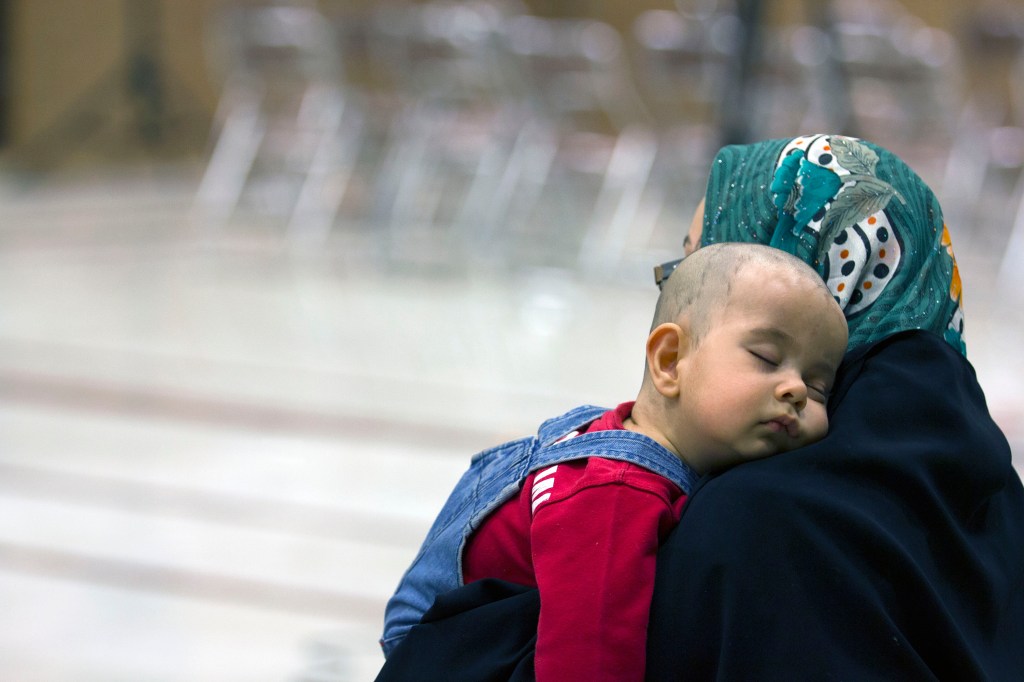
Human babies are, by any measure, among the most dependent newborns in the mammalian world. They are born with an enormous amount of neurological development still to do, and the environment in which that development happens matters. Close physical contact with a caregiver is a biological need, not just a comfort strategy.
Research in developmental neuroscience and attachment theory is consistent on this: responsive caregiving in infancy shapes the developing stress response system. When a baby signals a need and that need is met, they are not “learning bad habits.” They are learning that the world is safe, that their caregiver is reliable, and that their own communications are effective. These are lessons that support emotional regulation, social development, and mental health across a lifetime.
James McKenna, a leading researcher in parent-infant sleep, coined the term “breastsleeping” to describe the biologically symbiotic relationship between a breastfeeding mother and her baby during sleep, calling it the oldest and most successful sleep and feeding arrangement in human history. La Leche League International’s work on bedsharing and breastsleeping draws on his research, noting that when appropriate safe sleep guidelines are followed, this arrangement supports breastfeeding, reduces the disruption of night feeds for both mother and baby, and is normal across the majority of the world’s cultures.
This isn’t an argument that everyone should bedshare: it is not appropriate for every family (see the Safe Sleep Seven on La Leche League’s website). It is an argument for taking seriously the fact that the closeness babies seek at night is not manipulative, it is driven by a need. How families navigate that is entirely their own business, and there are many ways to respond to a baby’s need for proximity without sharing a bed, if that doesn’t work for your family.
Sleep Training Research: What It Shows (and What It Doesn’t)
This comes up a lot, and I know how much weight the phrase “the evidence shows it’s harmless” carries for exhausted parents who are trying to make decisions.
Extinction-based sleep training methods, including cry-it-out and controlled crying, are frequently described as “evidence-based” and “proven safe.” BASIS specifically focused on bringing sleep research to families and practitioners, and it is clear from their research that the evidence has significant limitations. Most studies on sleep training involve small sample sizes, high dropout rates, and relatively short follow-up periods. The most frequently cited long-term study found that by two years of age, sleep problems had largely resolved in both the sleep-trained group and the control group anyway. By six years old, no meaningful differences were found between the groups. BASIS notes that evidence of benefit to babies specifically, rather than to parental perceptions of their baby’s sleep, is limited, and that the long-term consequences of these methods remain unclear.
La Leche League’s writing on sleep training also raises questions the major studies tend not to address: the physiological and emotional cost to the baby during the training process, the effect on breastfeeding, and the studies that measure cortisol, a stress hormone, in infants who sleep separately. One independent study found that nighttime separation in the first month was linked to a heightened cortisol response to routine daytime stress in babies. This effect was not explained by breastfeeding practices or maternal behaviour.
Scientific American’s analysis of the sleep training research landscape notes that even the most widely cited studies have design problems significant enough to warrant real caution. Variables like where babies sleep, whether they are breastfed, and how families actually implement methods in real life are often left uncontrolled. One study found that being part of a research trial itself led parents to implement controlled crying more consistently than they would have in everyday life, which skewed results.
None of this means every parent who has sleep trained has harmed their child. It means the research is not as settled as it is often presented to be, and that marketing it to new parents as fully safe and evidence-based is not an accurate representation of what the science shows. Families deserve honest information rather than certainty that doesn’t exist.
Extinction-based sleep methods are generally not recommended for babies under four to six months, yet these methods are frequently suggested to parents of very young infants. There are also reasonable grounds for caution in children who have experienced trauma or early adversity, given what we know about developing stress-response systems, though this is based more on clinical reasoning than controlled trials. What’s clear is that these approaches are not universally appropriate, and parents deserve individualised guidance.
The second myth I want to address is the one about babies not learning to sleep without being “taught.” Learning to sleep is a developmental process, in the same way that walking and talking are developmental processes. No one worries that their baby will never walk because they picked them up when they cried. Babies’ sleep patterns mature over time with neurological development, and responsive parenting does not delay that process.
So What Can Help?
I want to be clear that acknowledging normal infant sleep does not mean dismissing how hard it is. Sleep deprivation is genuinely brutal. The absence of village-level support in modern Western parenting culture means that many parents are doing this largely alone, which is not the context in which any of us evolved to raise small children.
Practical things that can genuinely help without disrupting the breastfeeding relationship or overriding a baby’s developmental needs include safe bedsharing where appropriate (following Safe Sleep Seven guidelines), babywearing during daytime naps, maximising parental rest where possible, taking shifts with a partner, and accepting that this season, while relentless, is temporary.
For breastfeeding parents specifically, protecting the night feeds, particularly in the first six months, is one of the most important things you can do for your supply. If you are worried about your supply or your baby’s intake, please seek support from an IBCLC rather than trying to manage it with a feeding schedule or sleep intervention.
Holistic sleep consultants, for those who are really struggling, can be really helpful in further education around what is developmentally appropriate, and what can be done to try and optimise sleep, naps, and your rest. Look for someone with a Level 6 OCN-accredited qualification, as the world of baby sleep is very unregulated!
You do not need to be struggling in silence; you do not need to white-knuckle through an approach that doesn’t feel right for your family. Your baby waking at night is not a reflection of your parenting.
For more evidence-based information on infant sleep, I recommend BASIS (basisonline.org.uk) and La Leche League GB (laleche.org.uk).

